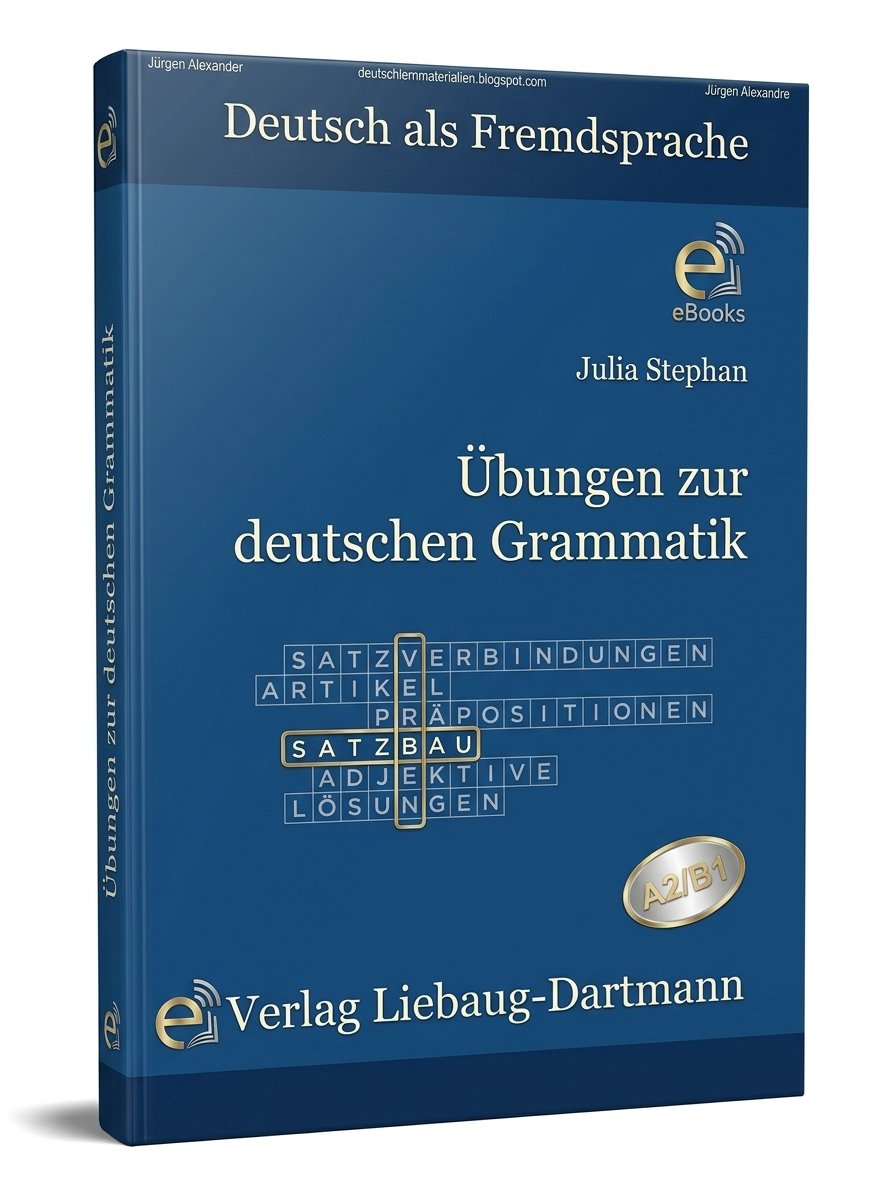
Description: Mastering German at the A2-B1 level requires focused practice. The right Übungen zur deutschen Grammatik A2-B1 bridge the gap between basic sentence construction and confident conversation. This guide presents essential exercise categories to refine your skills efficiently.
Why Regular Grammar Drills Matter
Consistent Übungen zur deutschen Grammatik A2-B1 transform passive knowledge into active language use. At this intermediate stage, learners often understand rules but struggle with real-time application. Daily short exercises—focusing on verb position in Nebensätzen or adjective endings—automate correct forms. This repetition builds fluency, reduces errors in speaking, and prepares you for exams like Goethe-Zertifikat B1. Without structured drills, common mistakes like mixing accusative and dative become habits. Dedicated practice ensures accuracy becomes second nature.
Mastering Noun Cases and Prepositions
One core area of Übungen zur deutschen Grammatik A2-B1 involves mastering accusative, dative, and genitive cases. Worksheets with fill-in-the-blank sentences for prepositions like “mit” (always dative) or “durch” (always accusative) are highly effective. For example, exercises contrasting “Ich lege das Buch auf den Tisch” (accusative, movement) versus “Das Buch liegt auf dem Tisch” (dative, position) clarify two-way prepositions. Repetitive case drills eliminate hesitation and build natural intuition for word order and article declension.
Verb Tenses and Modal Verbs Deep Dive
Effective Übungen zur deutschen Grammatik A2-B1 also target Präteritum (simple past) for sein, haben, and modal verbs, plus Perfekt for everyday speech. Practice converting present-tense sentences into both past forms. Modal verb exercises—understanding können, müssen, dürfen with double infinitives—are crucial. For instance, “Er hat es nicht tun können” requires special word order. Targeted worksheets with contextual dialogues (e.g., a work scenario using müssen and dürfen) solidify these structures for natural use in writing and speaking.
Subordinate Clauses and Conjunctions
Connecting ideas fluently demands Übungen zur deutschen Grammatik A2-B1 focused on weil, dass, obwohl, wenn. Exercises should emphasize verb kick to the end of the clause. A typical drill: combine two main clauses into one subordinate clause sentence. For example, “Es regnet. Wir bleiben zu Hause” becomes “Wir bleiben zu Hause, weil es regnet.” Advanced worksheets add temporal clauses with bevor or nachdem. This practice prevents the common learner error of placing the verb second in subordinate clauses, dramatically improving writing coherence and speaking sophistication.
Adjective Endings and Comparative Forms
Finally, no set of Übungen zur deutschen Grammatik A2-B1 is complete without adjective declension tables and comparative/superlative drills. Exercises should distinguish definite (der große Tisch), indefinite (ein großer Tisch), and zero article (großer Kaffee) patterns. Comparative exercises transform “schnell” to “schneller” and “am schnellsten” within sentence contexts. Using real-world themes (e.g., comparing cities or products) makes memorization practical. These drills polish spoken German, allowing you to describe people, express opinions, and shop with accurate, natural-sounding descriptions.