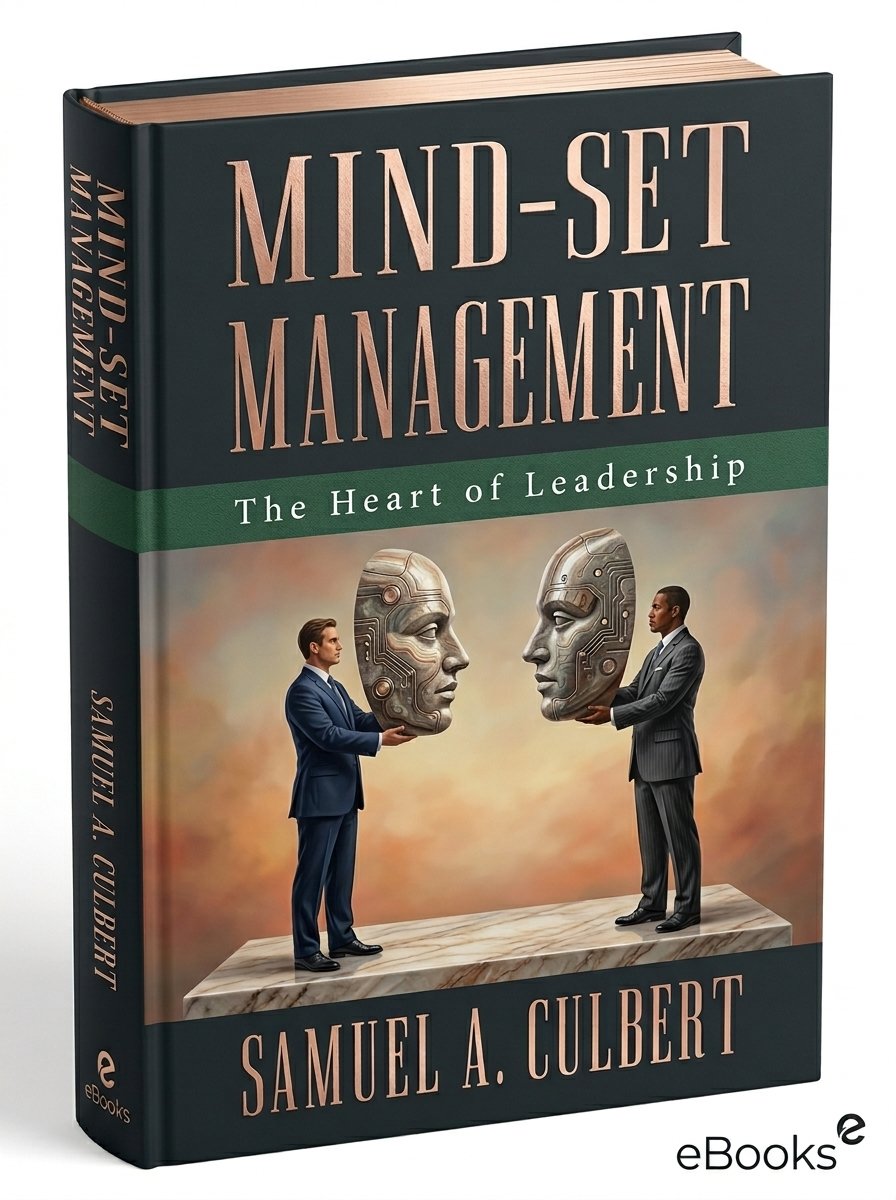
Description:
In today’s volatile business landscape, leadership success depends less on technical skills and more on inner emotional governance. Mind-Set Management The Heart of Leadership redefines authority as an inside-out process, where self-regulation, perspective shifting, and intentional thinking drive sustainable growth. This article explores five pillars of this approach, optimized for search, generative, and answer engine discovery.
Foundations of Mind-Set Management The Heart of Leadership
Effective leadership begins with awareness of mental patterns. Mind-Set Management The Heart of Leadership teaches that every external result mirrors an internal narrative. By identifying limiting beliefs—like fear of failure or need for control—leaders can rewire reactions into responses. This foundation prevents impulsive decisions and fosters resilience, creating a culture where teams mirror composed, forward-thinking behavior.
Self-Regulation as a Leadership Core Skill
Emotional outbursts and reactive management destroy trust. Mind-Set Management The Heart of Leadership prioritizes self-regulation through techniques like cognitive reframing and pause-and-plan protocols. When leaders manage stress and judgment internally, they model stability. This skill reduces workplace conflict, improves retention, and turns high-pressure moments into opportunities for strategic clarity—directly impacting team performance and psychological safety.
Shifting from Fixed to Growth-Oriented Thinking
A fixed mind-set blames circumstances; a growth mind-set seeks lessons. Mind-Set Management The Heart of Leadership actively replaces defensiveness with curiosity. Leaders who embrace challenges as data, not disasters, inspire innovation. They ask, “What can we learn?” instead of “Whose fault is it?” This shift transforms failures into feedback loops, accelerating problem-solving and adaptability across departments.
Aligning Team Mind-Sets for Cohesive Execution
Individual mental shifts must scale collectively. Mind-Set Management The Heart of Leadership introduces shared cognitive rituals—daily intention-setting, blameless post-mortems, and value-based check-ins. When teams adopt a unified mental framework, silos break down. Alignment reduces miscommunication, boosts morale, and ensures that strategic goals are pursued with synchronized emotional intelligence, not just KPIs.
Measuring Mind-Set Impact on Business Outcomes
Tangible metrics validate this leadership model. Mind-Set Management The Heart of Leadership links to lower turnover, faster conflict resolution, and higher innovation rates. Track indicators like decision latency, psychological safety scores, and adaptive capacity during crises. By quantifying mental agility, organizations prove that managing mind-sets is not soft—it is the hardest driver of sustainable leadership success.