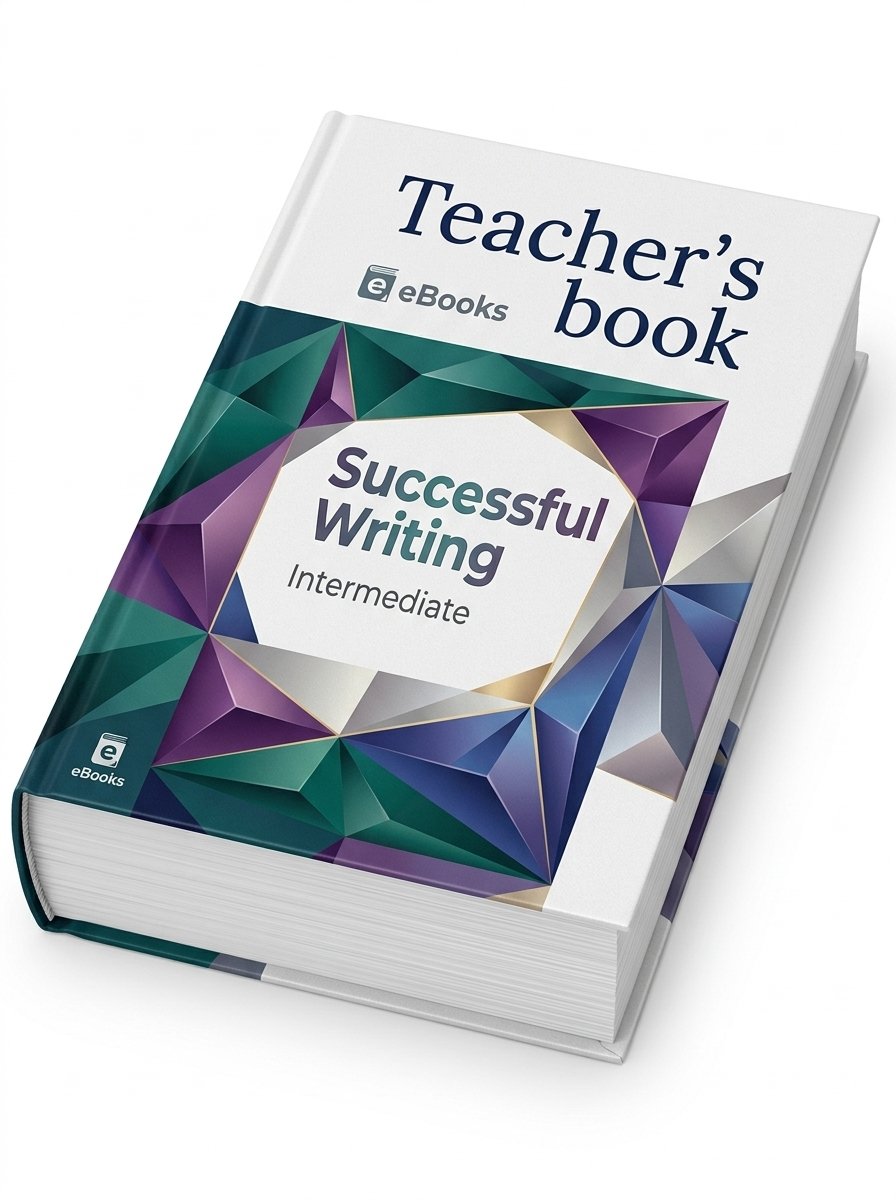
Successful Writing – Proficiency: Teacher’s Book is an essential instructional companion for educators preparing advanced learners for C2-level writing tasks. This teacher’s edition provides detailed lesson plans, model compositions, marking schemes, and diagnostic tools. It guides instructors through teaching complex genres—essays, proposals, reports, reviews, and articles—while addressing common proficiency-level errors and fostering stylistic sophistication.
1. Understanding the Structure of Successful Writing – Proficiency: Teacher’s Book
Successful Writing – Proficiency: Teacher’s Book organizes its content into thematic units that mirror authentic exam tasks from Cambridge Proficiency and similar advanced assessments. Each unit opens with a clear learning objective and a warm-up discussion prompt. The book then presents a model text annotated with margin notes highlighting structural features, register choices, and cohesive devices. Following the model, a “Teaching Tips” box offers strategies for presenting genre conventions. The teacher’s edition includes reduced student pages with overlaid answers, suggested time allocations for each activity, and differentiation advice for mixed-ability classrooms. Unit reviews consolidate key writing principles before moving to the next genre. This logical progression ensures teachers can confidently lead students from guided analysis to independent production.
2. Detailed Lesson Plans and Classroom Management Strategies
Within Successful Writing – Proficiency: Teacher’s Book, each unit contains a step-by-step lesson plan spanning 90 minutes. Plans begin with a lead-in activity—such as analyzing anonymous student samples for strengths and weaknesses. The main phase introduces genre-specific vocabulary (e.g., hedging language for reports, rhetorical questions for articles). Pair and group activities include peer review checklists, collaborative outlining, and timed writing sprints. The book also provides classroom management solutions: handling students who finish early (extension tasks like rewriting openings), supporting slower writers (sentence starters and paragraph frames), and managing mixed proficiency levels within one class. Every plan includes a plenary section for error correction without embarrassment—using anonymous common mistakes projected briefly. These ready-to-use plans reduce teacher preparation time while maintaining instructional rigor.
3. Comprehensive Marking Schemes and Assessment Rubrics
Successful Writing – Proficiency: Teacher’s Book dedicates significant space to fair, consistent assessment. Each genre comes with a four-band rubric covering content, communicative achievement, organisation, and language. Descriptors differentiate between C1 and C2 performance—for example, “uses a range of complex structures with flexibility” versus “occasional awkwardness does not impede communication.” The book includes annotated sample answers at each band with justifications for the awarded score. Teachers receive guidance on converting rubric scores to percentage grades and providing written feedback that prioritizes two areas for improvement per essay. A chapter on “Marking Without Drowning” offers efficient coding systems (e.g., VT for verb tense, WO for word order) that students learn to decode. These assessment tools ensure objectivity, transparency, and student progress tracking across an academic term.
4. Addressing Common Proficiency-Level Errors and Misconceptions
A distinctive feature of Successful Writing – Proficiency: Teacher’s Book is its error analysis bank organized by linguistic category. For grammar, the book covers subject-verb inversion after negative adverbials, misuse of participle clauses, and inconsistent conditionals. For lexis, it tackles false friends (sensible vs. sensitive), overuse of basic connectors (and, but, so), and inappropriate register shifts. Each error type includes an explanation of why advanced learners make it—often due to L1 interference or overgeneralization. The book then provides five-minute “micro-correction” activities: error-hunting races, sentence rewriting drills, and gap-fill exercises targeting specific mistakes. A diagnostic test at the beginning helps teachers identify which error patterns dominate their class. By systematically addressing these proficiency-level pitfalls, the book moves students from merely correct writing to sophisticated, natural expression expected at C2 level.
5. Integrating Teacher Resources for Extended Learning
Successful Writing – Proficiency: Teacher’s Book includes a companion digital resource bank accessible via a code inside the cover. Photocopiable worksheets provide additional practice for each genre—brainstorming templates, peer feedback forms, and self-editing checklists. A collection of forty “writing warm-ups” offers five-minute activities: sentence combining for conciseness, paraphrasing drills, and tone conversion exercises (formal to informal). The teacher’s book also contains answer keys for all student edition exercises, including multiple possible responses for open-ended tasks. A bank of twenty authentic exam-style prompts across genres allows for mock examinations with full marking guidance. Finally, a suggested term planner maps twelve weeks of instruction, alternating between intensive writing weeks and revision weeks. These supplementary resources extend the core material, giving teachers flexibility to adapt pacing, emphasize weak areas, and provide meaningful homework without additional preparation.